


Choosing reliable industrial moving parts is far more complex than most factory managers assume. Many facilities only focus on immediate price and appearance when selecting wheels, ignoring hidden structural flaws that cause frequent breakdowns, safety hazards, and unexpected maintenance costs. Poor-quality casters accelerate equipment aging, disrupt continuous production lines, and create unnecessary downtime that eats into annual operational profits. Selecting high-performance heavy duty industrial castors directly eliminates these recurring troubles and stabilizes overall workshop logistics efficiency for years on end.
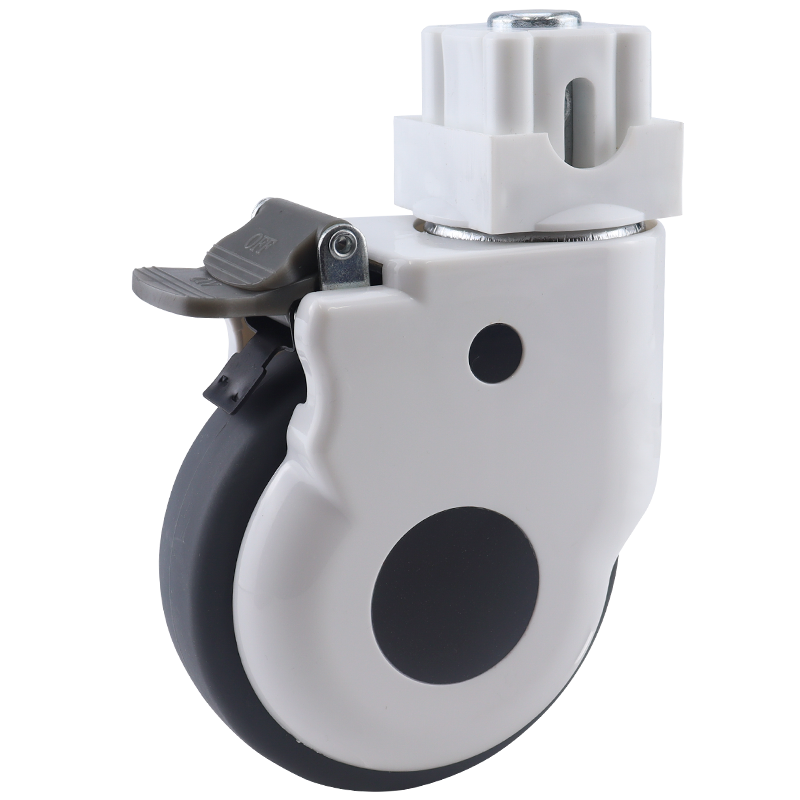
Most common caster failures do not happen suddenly. They develop quietly from insufficient load rating, poor bearing sealing, and incompatible ground adaptability. Workshops often replace damaged wheels repeatedly without identifying root causes, wasting labor hours and spare parts budgets month after month. Uneven ground pressure, frequent heavy loading impacts, dust accumulation, and humid working environments all amplify hidden damage inside wheel brackets and rotating cores. Professional manufacturing from Jianbin Caster addresses these invisible risks through integrated structural optimization and customized material formulas.
One overlooked deep issue is dynamic load resistance, which differs greatly from static load parameters marked on ordinary products. Static load data only tests stationary weight bearing, while actual factory operations involve pushing, turning, braking, and frequent load shocks. Low-grade casters deform, loosen, or break easily under dynamic pressure, even when they meet labeled static standards. Users rarely check this indicator before purchase, leading to premature wheel cracking, bracket bending, and unstable equipment positioning during transportation.
Ground adaptability remains another critical unspoken problem across industrial caster applications. Concrete floors, rough workshop pavements, dust-heavy areas, oil-stained surfaces, and low-temperature warehouses each demand unique wheel material performance. Soft wheels wear fast on hard rough ground, while overly hard wheels slip badly on oily floors and produce loud noise pollution. Matching wheel hardness, wear resistance, and anti-slip properties to actual site conditions prevents frequent slipping, shaking, and abnormal friction damage that shortens service life drastically.
Bearing sealing performance directly decides how long casters maintain flexible rotation. Open or poorly sealed bearings quickly absorb dust, iron powder, oil residue, and moisture in industrial environments. Internal friction rises sharply, wheels become stiff to turn, steering locks malfunction, and eventually bearings seize completely. Many maintenance teams lubricate wheels frequently but fail to realize weak sealing design is the permanent source of rotation failure, making routine maintenance useless in the long run.
Comparison of Common Caster Failure Causes & Professional Solution Effects
| Failure Phenomenon | Underlying Root Cause | Low-Quality Caster Performance | High-Grade Heavy Duty Caster Performance |
|---|---|---|---|
| Wheel surface rapid wear | Unreasonable polyurethane formula, low abrasion resistance | Wear out within 1–3 months | Stable wear resistance for 1–3 years |
| Bracket bending & deformation | Thin steel plate, poor welding process | Bend under slight overload impact | High-strength stamped steel, impact-resistant structure |
| Stiff rotation & jamming | Poor bearing sealing, easy dust intrusion | Need monthly lubrication and frequent replacement | Fully sealed bearing, long maintenance-free cycle |
| Sliding deviation & unstable steering | Unbalanced wheel center structure | Frequent direction deviation, safety risks | Precise concentric design, flexible and stable steering |
| Noise disturbance during movement | Hard mismatched material, loose internal gaps | Loud harsh noise affecting workplace environment | Low-noise damping structure, quiet operation |
Long-term heavy-load handling also causes cumulative fatigue damage to caster brackets. Cheap stamped brackets use thin raw materials that develop tiny cracks after repeated pressure cycles. These cracks are invisible at first but expand rapidly until sudden breakage, which may cause equipment tipping, cargo falling, and serious workplace safety accidents. Standard heavy-duty castors adopt thickened integral forming processes to resist cyclic fatigue pressure and maintain structural integrity under continuous high-frequency use.
Environmental corrosion quietly shortens caster service life in chemical workshops, coastal humid areas, and outdoor storage yards. Ordinary metal brackets rust quickly, polyurethane materials age and harden, and wheel flexibility declines rapidly. Special anti-corrosion surface treatment and weather-resistant polymer wheel materials resist moisture, chemical erosion, and temperature changes, keeping stable performance in harsh outdoor and special industrial scenarios.
Overall operational cost savings are far more important than initial purchase price. Although economical ordinary casters cost less upfront, frequent replacement, downtime losses, maintenance labor, and safety accident compensation push total annual expenditure much higher. Durable industrial heavy casters reduce replacement frequency, lower daily maintenance workload, and guarantee uninterrupted production flow, delivering obvious long-term economic benefits for factories, warehouses, logistics platforms, and mechanical equipment supporting systems.
Practical application experience proves that standardized, load-matched, environment-adapted heavy industrial casters are the core guarantee of smooth material transportation. Avoid blind low-price selection, focus on hidden dynamic load risks, sealing quality, ground adaptability and anti-fatigue performance, and you can completely avoid most recurring caster troubles that trouble countless industrial sites every day. Stable moving components lay a solid foundation for efficient, safe and low-cost long-term factory operation.